
A science lesson can explain how a system works. An innovation challenge asks students to use that knowledge when the answer is not obvious. During Massachusetts STEM Week in October 2026, the Healey-Driscoll administration brought the MassMakes Innovation Challenge to 250 students from eight school districts in Western and Central Massachusetts. The state described the event as an opportunity for students to use emerging technology to tackle real-world challenges in high-demand industries.
The announcement is a reminder that hands-on STEM activities can make school learning feel connected to problems beyond the classroom. Students are not simply memorising a definition or following a demonstration. They are asked to interpret a challenge, work with teammates, test ideas and explain why a solution might work.
What makes an innovation challenge different
A well-designed challenge begins with a question that has more than one possible response. Students might be asked to improve a process, design a simple prototype, analyse information or consider how a technology could address a community or industry need. The task should be demanding enough to require thought, but structured so that students can begin with the knowledge and materials available to them.
That balance is important. If a challenge is too open-ended, students may not know where to start. If every step is prescribed, there is little room for decision-making. Teachers can provide a clear goal, a few constraints and examples of relevant concepts, then let teams decide how to approach the problem.
Connect STEM subjects rather than teaching them in isolation
Real-world problems rarely arrive labelled as biology, mathematics, engineering or computer science. A team designing a water-monitoring idea may need to think about chemistry, measurement, data and the needs of people who will use the information. A project involving energy can combine physics, environmental science, budgeting and communication.
Students learn to move between these areas as they define a problem. They may estimate dimensions, compare materials, read a technical explanation, create a diagram and present their reasoning. The process shows that STEM is not only a collection of separate school subjects; it is also a way to ask questions and use evidence.
Build teamwork and communication skills
Innovation projects give students a reason to divide responsibilities and coordinate their work. One student may research background information, another may sketch a design, and another may track measurements or prepare a presentation. Teams need to agree on priorities, explain disagreements and make decisions when time or materials are limited.
Teachers can help make teamwork fair by assigning rotating roles and asking every student to explain part of the process. A group should not rely on one confident student to do all the technical work while others watch. Reflection at the end can help students identify how decisions were made, whose ideas were included and what they would change about their collaboration.
Make challenges inclusive and meaningful
Access to STEM activities should not depend on whether a student already has robotics experience, a computer at home or a family member who works in technology. Schools can introduce the key concepts before the activity, provide materials during class and offer different ways to contribute. Students who are strong communicators, artists, organisers or careful observers can make important contributions to an engineering or science project.
Teachers should also choose problems that connect with students’ lives without assuming that every student has the same experiences. A community-focused challenge might involve safer routes, reducing waste, improving access to information or making a shared space easier to use. Students can investigate a problem respectfully, gather evidence and consider who might benefit from a proposed solution.
Turn a one-day event into ongoing learning
A challenge can generate excitement, but the deeper value comes when students have time to revise their ideas. After presenting a prototype or proposal, teams can receive feedback, test a change and explain what they learned. Teachers can connect the experience to later lessons in mathematics, science, technology or writing.
Schools can also invite local professionals, colleges and community organisations to describe how they approach problems in their work. Guest speakers should help students understand the range of possible pathways, not suggest that there is only one route into a technical career. Students benefit from hearing about certificates, apprenticeships, two-year and four-year degrees, and jobs that combine technical and people skills.
Celebrate the process, not only the winning idea
Innovation challenges are most educational when students are recognised for thoughtful questions, careful testing, persistence and collaboration—not only for producing the most polished prototype. A team that discovers why its first idea failed may have learned something important. Sharing those lessons helps make experimentation feel like a normal part of learning rather than a risk to avoid.
Massachusetts’ MassMakes event brought 250 students together around practical challenges during STEM Week. For school communities, the broader lesson is that meaningful STEM activities can help students see themselves as problem-solvers. With accessible materials, strong teacher guidance and time to reflect, a short challenge can become the beginning of a much longer interest in science, technology and community innovation.
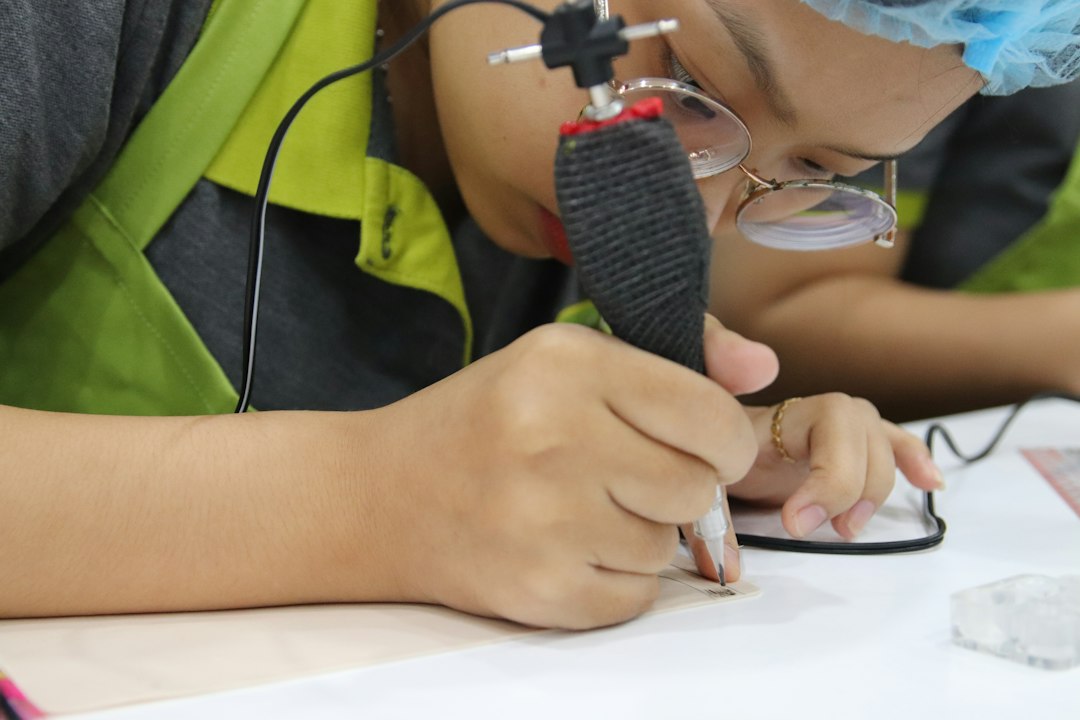
Illustrative student project photograph; not a photograph of the MassMakes event. Photo via Unsplash.