
Career planning can feel abstract to a teenager who has not yet had a chance to see what different jobs involve. A classroom lesson may explain a field, but a hands-on project, an internship or a conversation with someone working in that field can make the possibilities more concrete. Massachusetts is putting additional support behind that kind of experience. On October 22, 2026, the Healey-Driscoll administration announced more than $5.1 million in grants to expand and strengthen Innovation Career Pathways programs in high schools across the state.
The state says the investment includes planning grants for districts developing potential new pathways and continuation or implementation funding for existing programs. The announcement is part of Massachusetts STEM Week and is intended to connect high-school learning with industries that need skilled workers. It does not mean every school will immediately offer every pathway, and some future expansion depends on later designation and funding decisions.
What the new investment supports
According to the October 22 announcement, more than 8,500 students are enrolled in 303 Innovation Career Pathways across 130 Massachusetts high schools during the current school year. The state awarded $436,000 in planning grants to 30 school districts to support the development of 15 potential new pathways, including programs at 11 high schools that are new to the initiative. More than $4.7 million is directed toward implementation and continuation grants for existing pathways.
If the proposed pathways receive the required designation and subsequent implementation funding, the state says the program could reach 318 pathways at 141 high schools and nearly 9,000 students in the 2027–28 school year. That projection is conditional. It should be understood as a possible next step, not as a guarantee that every proposed program will open.
What a pathway can look like
Innovation Career Pathways are structured sequences of courses and experiences connected to high-demand industries. Massachusetts identifies fields such as health care, life sciences, information technology, advanced manufacturing, clean energy, and business and finance. Students can explore a field through advanced coursework and practical experiences, including internships and other forms of work-based learning.
The announcement describes examples at Norwood High School, where students can explore health care, clean energy and business. The school has used medical training experiences, electric-vehicle training equipment and a school store to connect learning with practical tasks. These are examples from Norwood, not a description of what every participating school offers. Each district develops programs around its resources, partners and local workforce needs.
Why hands-on experience can help young people
Career exploration is more useful when students can test their interests before making major decisions. A student curious about health care might learn about patient communication, anatomy or the range of roles in a clinical setting. Someone interested in clean energy could explore electricity, materials, engineering or the skills involved in maintaining new technologies. A business pathway might involve customer service, budgeting, inventory or marketing.
These experiences can also help students recognise skills that transfer between fields. Communication, teamwork, problem-solving, careful documentation and reliability matter in many workplaces. Students can learn to ask questions, receive feedback, revise a project and explain what they contributed. Those habits are valuable whether a graduate moves directly into employment, pursues a certificate or continues to college.
Partnerships connect school and work
Massachusetts says pathways work with local MassHire Workforce Boards to align programs with regional workforce needs and connect students with career opportunities. Partnerships with employers and higher education institutions can help schools design relevant coursework, arrange workplace exposure and identify credentials or dual-enrollment opportunities. The planning grants announced in October are intended to help districts develop curriculum, establish partnerships and design work-based learning as they prepare to apply for program designation in spring 2027.
Good partnerships should keep student learning at the centre. An internship is not simply a chance to provide unpaid labour or observe adults at work. Students need clear learning goals, supervision, feedback and a way to reflect on what they experienced. Schools and employers should also consider accessibility, transportation, scheduling, safety and whether students from different backgrounds can participate.
How students and families can explore options
Students do not need to know their future career before they ask about a pathway. A useful first step is to list subjects and activities that spark curiosity, then look for programs that offer a chance to explore those interests. A student who enjoys biology might compare health care and life-science options. Someone who likes building or troubleshooting might investigate manufacturing, information technology or clean energy. Interests can change, and exploration is part of the process.
Families can ask school counselors which pathways are currently available, what courses are required, whether students can participate in internships or dual enrollment and how transportation is handled. They can also ask whether a program is already approved or still being planned. Those details matter because the statewide announcement describes a mix of existing pathways and proposals for future expansion.
Make access part of the design
Career programs are strongest when students can see themselves in the opportunities being offered. Schools can share information early, explain prerequisites in plain language and provide support for students who may not have professional networks at home. Employers and colleges can help by making expectations clear and offering experiences that are accessible to students with different schedules, needs and levels of prior exposure.
Pathways should also preserve room for broad learning. A career-focused course sequence can be rigorous without narrowing a student’s future too soon. Strong reading, mathematics, science, communication and civic learning remain important across occupations. The goal is to connect academic knowledge with possible applications, not to replace a well-rounded education with job training alone.
Keep the focus on student choice
Massachusetts’ $5.1 million investment signals continued attention to high-school experiences that connect learning with future options. The number of students and schools already participating shows the scale of the existing program, while the planning grants point to possible growth. For students, the most important question is whether a pathway offers meaningful exploration, good instruction and supported real-world experience. For families, asking about current local options is the best way to understand what is actually available.
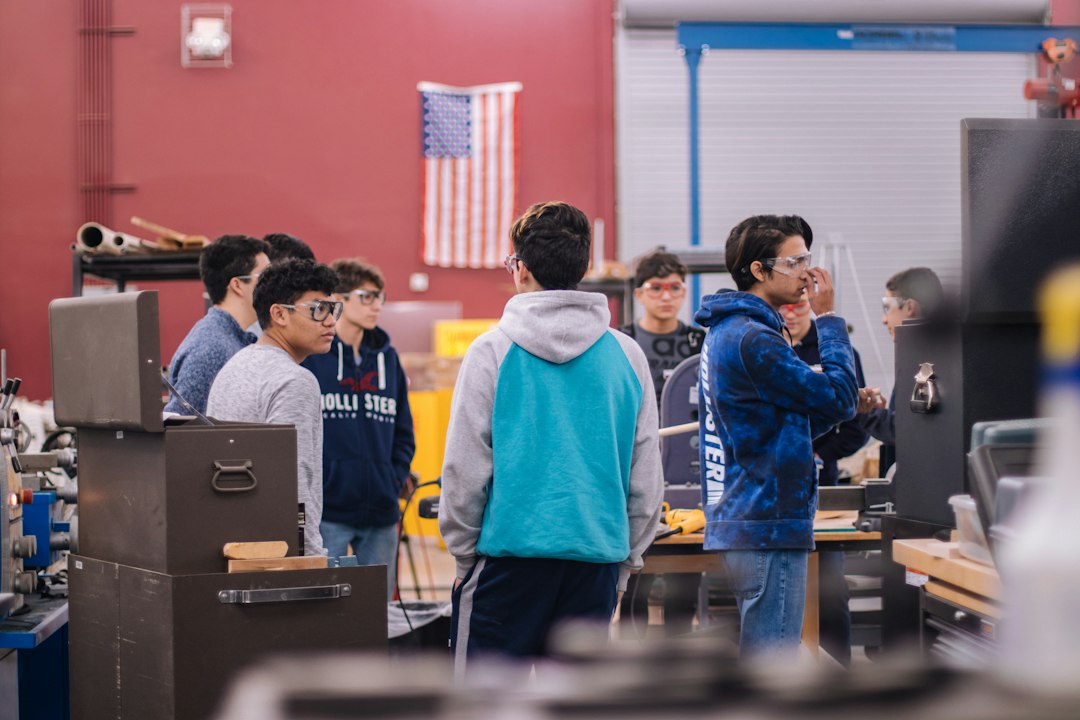
Illustrative technology-learning image; not a photograph of a Massachusetts pathway participant. Photo by Jeswin Thomas via Unsplash.