
Artificial intelligence tools are becoming part of the information environment students encounter every day. They can help explain a difficult concept, generate ideas or organize information, but they can also produce inaccurate answers, reflect bias and make confident claims without reliable evidence. Schools therefore have an important opportunity: teach students not simply how to use AI, but how to think critically when it appears.
Start with questions, not shortcuts
AI literacy begins with understanding that a generated response is not automatically true. Students should learn to ask where a claim came from, what evidence supports it and what information might be missing. A fluent paragraph can still contain an incorrect date, a misleading summary or a made-up source.
Teachers can model this habit with low-stakes examples. Ask a tool to explain a familiar topic, then compare its response with a textbook, a trusted reference or classroom notes. Students can highlight accurate details, identify unsupported statements and rewrite the answer using evidence they can verify.
Make verification a routine
A practical verification routine can be simple: identify the main claim, locate an independent source, check the date and context, and decide whether the source actually supports the claim. For research assignments, students should open and read cited sources rather than trusting a list of titles produced by a tool.
This process connects AI literacy with long-established information skills. Students still need to distinguish fact from opinion, recognize persuasive language, evaluate an author’s expertise and notice when a source is outdated. AI adds a new reason to practice those habits; it does not replace them.
Protect original thinking
Technology can support brainstorming, but students need to remain responsible for the ideas and work they submit. A teacher might allow students to ask for possible project questions while requiring them to choose, refine and justify their own research question. In writing, a tool might suggest ways to organize a draft, while the student remains responsible for the argument, evidence and final wording.
Clear classroom expectations help prevent confusion. Students should know when AI assistance is permitted, what kind of assistance must be acknowledged and which tasks are intended to show independent skill. These rules should be explained before an assignment begins, not introduced only after a concern arises.
Discuss privacy and fairness
Students should not enter private information about themselves, classmates, teachers or family members into public AI systems. They should also learn that automated systems can reflect patterns and biases in the material used to build them. Asking whose perspective is represented—and whose may be missing—encourages more careful interpretation.
For younger learners, these conversations can use everyday language: keep personal details private, check surprising answers with a trusted adult, and remember that a computer-generated response does not know everything about a person or situation.
Keep people at the center
AI can offer suggestions, but it cannot replace the relationships that make learning meaningful. Teachers understand classroom context, notice when a student is discouraged and adapt explanations to individual needs. Classmates bring different experiences and questions that can deepen a discussion.
The goal is not to make every student an expert in technology. It is to help them become thoughtful users who can question information, protect privacy, acknowledge assistance and make informed decisions. Those habits will remain valuable as tools continue to change.
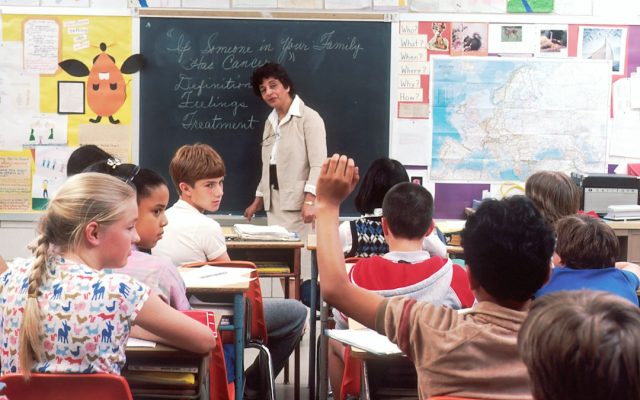
Photo: Timur Shakerzianov / Unsplash